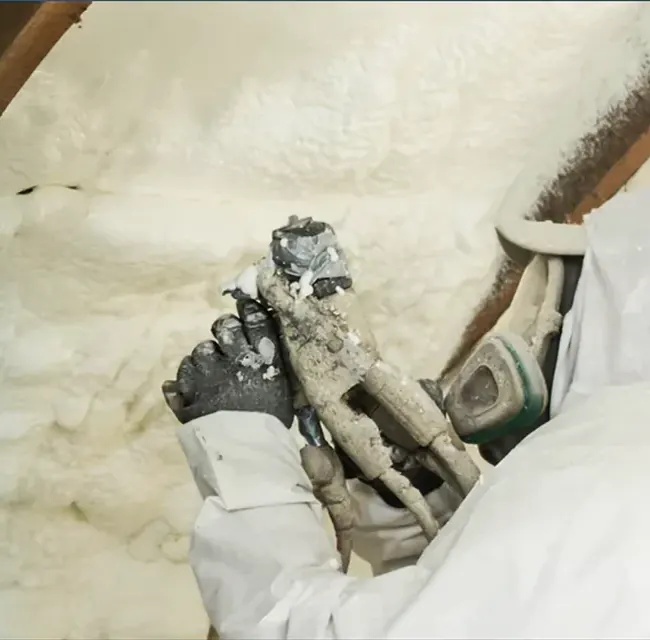
 Attics & roof decks
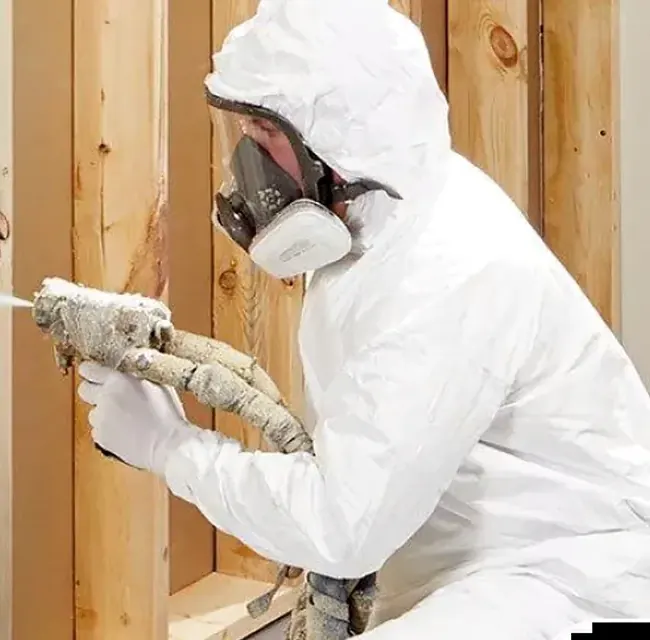 Exterior walls
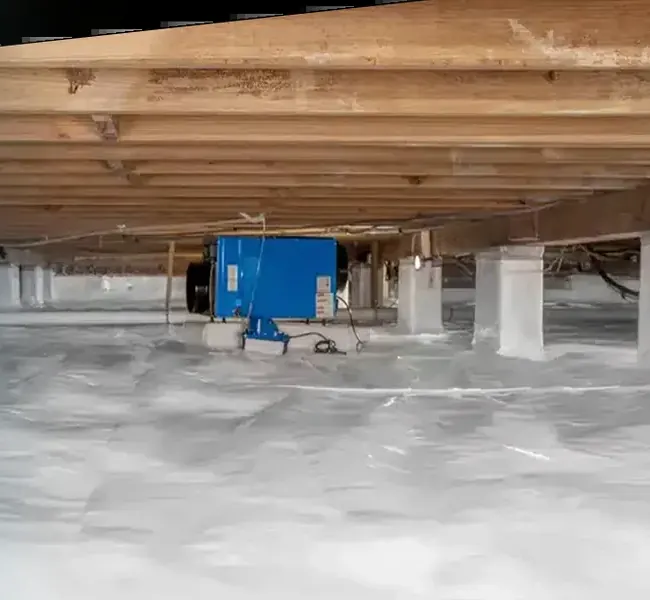 Crawl spaces & rim joists
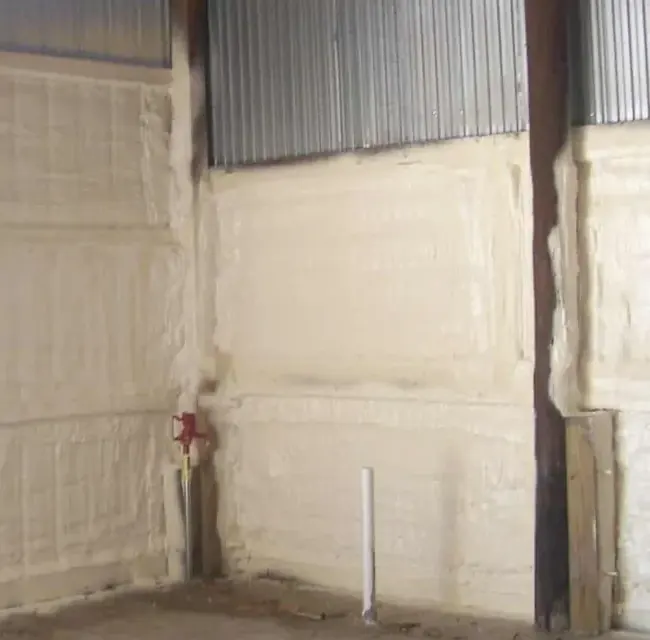 Metal buildings
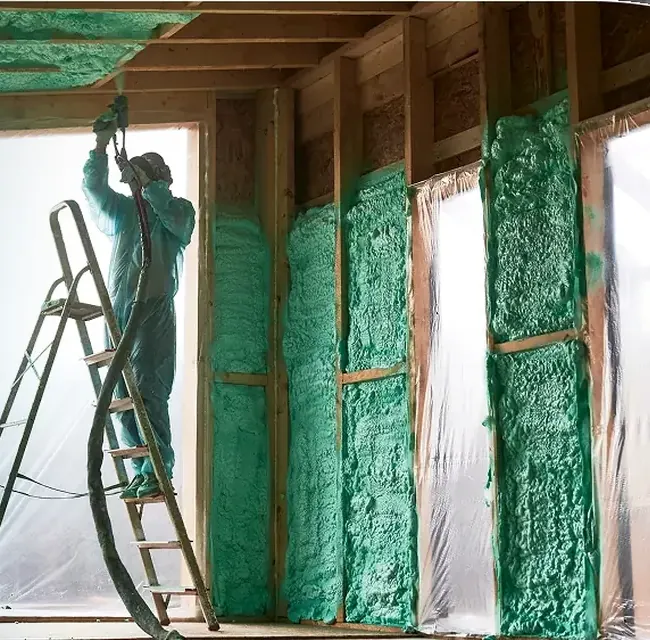 Pole barns, shops & ag
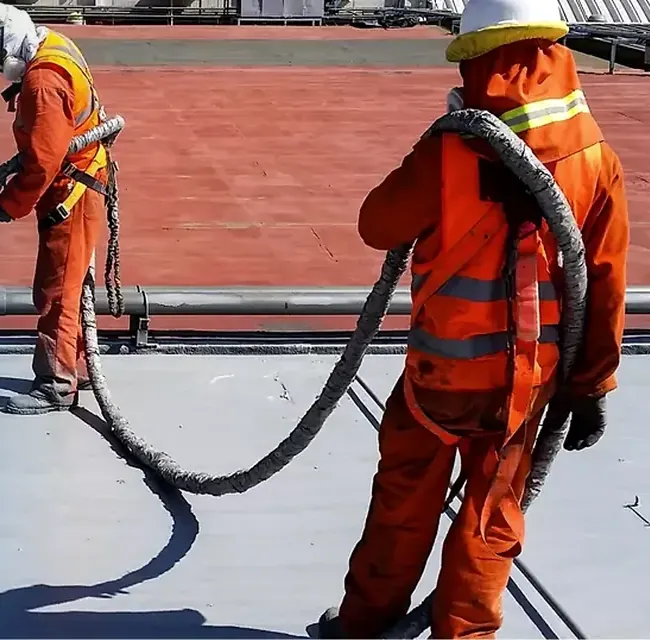 SPF roofing
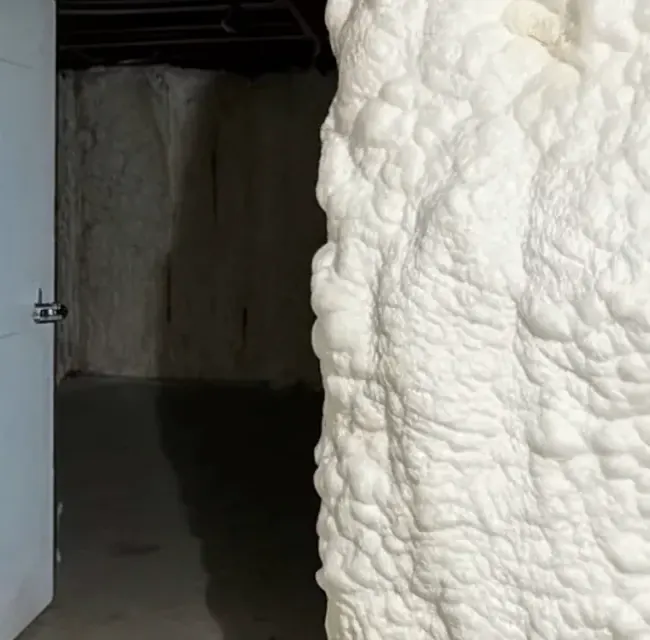 Basement walls
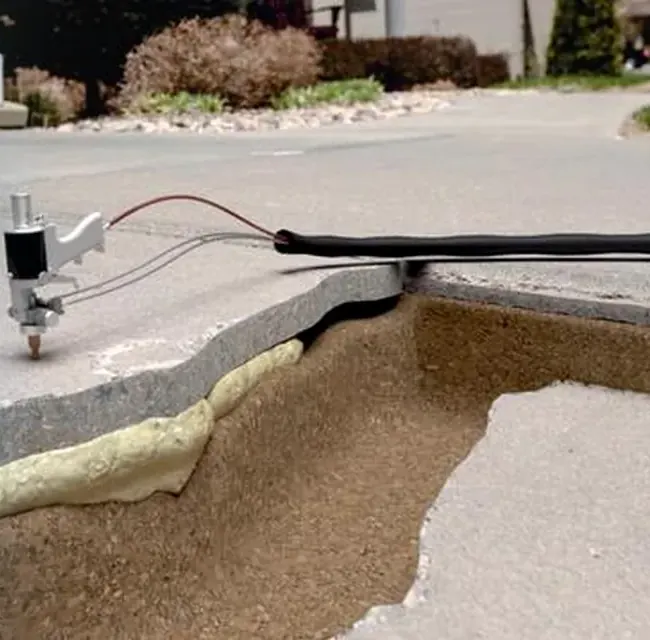 Concrete lifting
Spray Foam in Metal Buildings: How to Stop Condensation for Good
Why steel buildings drip, why faced fiberglass so often fails, and how closed-cell spray foam keeps warm, humid air off cold panels — plus thickness, prep and code notes.
Key takeaways
- Metal buildings "sweat" when warm, moist indoor air touches steel that is colder than the air's dew point.
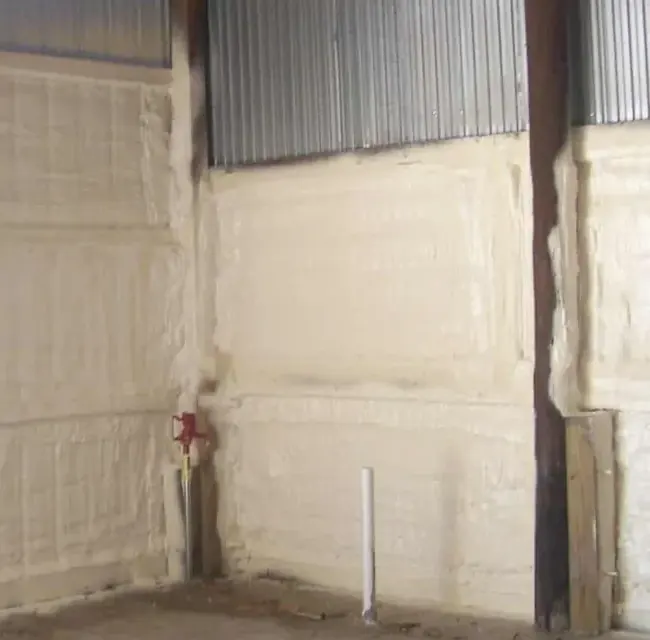
- Closed-cell foam bonds directly to the panel, so there is no air gap for moisture to reach — the fix is the contact, not just the R-value.
- Around 1.5–2 inches of 2 lb closed-cell acts as a vapor retarder; more thickness is about heating and cooling, not condensation.
- Occupied buildings generally need a thermal barrier over the foam; storage and ag buildings follow different rules, so check before you spray.
Walk into an uninsulated steel building on a cold morning and you can hear the problem before you see it: a slow drip from the roof purlins, water beading on the wall panels, puddles under the ridge. Owners call it sweating. Building scientists call it condensation, and it is the single most common complaint about metal buildings.
It is also one of the most fixable. Here is what is actually going on, why the usual insulation so often fails, and how closed-cell spray foam solves it.
Why metal buildings drip
Air always holds some water vapor. The warmer it is, the more it can hold. Every parcel of air has a dew point: the temperature at which it can no longer hold its moisture and water starts to form on surfaces.
Steel is an excellent conductor. A roof panel sits within a degree or two of the outdoor temperature. So on a 30°F night, the inside face of that panel is roughly 30°F too. If the air inside is 70°F at 50% relative humidity, its dew point is about 50°F. The moment that air touches the 30°F steel, water condenses out of it — and gravity does the rest.
The moisture comes from everywhere: people, propane heaters (combustion produces water vapor), wet vehicles and equipment, livestock, concrete slabs that are still curing, and stored crops. The more of those a building has, the worse it drips.
Why faced fiberglass so often fails
The traditional answer is a fiberglass blanket with a vinyl or foil facing, stretched over the purlins before the roof sheets go on. On paper, the facing is the vapor retarder that keeps humid air off the steel. In practice, it depends on that facing staying perfect for the life of the building.
- Tears and punctures. Forklifts, ladders, birds and rodents open holes, and every hole lets moist air in behind the facing.
- Unsealed seams. The laps between rolls are rarely taped perfectly. Air finds them.
- Compression at the purlins. Where the blanket is crushed between the purlin and the panel, its R-value drops to almost nothing, which leaves cold stripes the length of the roof.
- Trapped water. Once condensation forms behind the facing, it has nowhere to go. The fiberglass soaks up, sags, and starts to smell.
Most of the sagging, stained “belly” insulation you see in older steel buildings is the result of exactly this.
How closed-cell spray foam fixes it
Spray foam attacks the problem differently. Instead of trying to keep a separate membrane intact, it removes the air gap entirely.
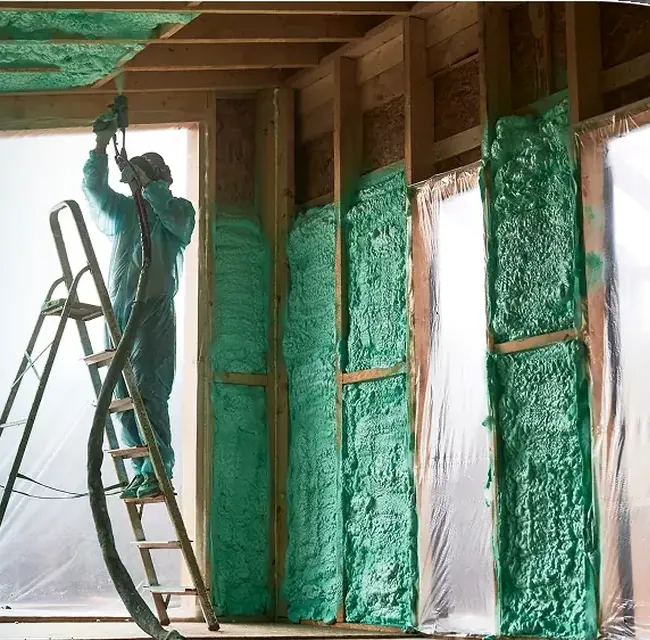
Two-pound closed-cell foam is sprayed straight onto the inside of the panels, where it expands, bonds to the steel and cures into a rigid layer. Because it is fully adhered, there is no space between the insulation and the metal for humid air to reach. And because the foam itself is air-impermeable and has very low vapor permeance, the inside surface of the foam stays close to room temperature — well above the dew point.
That is the key point: the contact does the condensation control. R-value matters for heating and cooling costs, but even a modest thickness stops the dripping, because warm air never meets cold steel.
Closed-cell foam also brings a few extras that matter in metal buildings:
- It seals panel laps, fastener holes and the gaps at eaves and base trim in the same pass.
- It stiffens the skin. Closed-cell foam adds measurable racking strength and can quiet panel “oil-canning” and rain noise.
- It does not provide a nesting spot for birds and rodents the way a loose blanket does.
How thick should it be?
Thickness depends on what the building is for. Use these as starting points, then confirm against your energy code and the foam manufacturer’s data:
| Building use | Common closed-cell thickness | Main goal |
|---|---|---|
| Unheated storage, equipment sheds | 1–1.5 in | Stop condensation and dripping |
| Heated shop or garage | 2–3 in walls, 2–4 in roof | Condensation plus lower heating bills |
| Climate-controlled workspace or office | 3 in and up, or to code R-value | Comfort and energy code compliance |
| Livestock or high-humidity ag | 2–3 in plus a protective coating | Moisture, washdown and pest resistance |
At roughly 1.5 to 2 inches, 2 lb closed-cell foam reaches the permeance of a Class II vapor retarder. Going thicker adds R-value — typically around R-6 to R-7 per inch — but does not make the condensation control “more on.”
Prep and installation details that matter
Code check first
Thermal and ignition barrier requirements depend on the occupancy — a heated workshop, a livestock barn and a storage building can be treated very differently. Ask your applicator which barrier, if any, your building needs before the job is priced.
Retrofit or new construction?
Both work. In new buildings, foam can go on as soon as the panels are up, often before doors, lighting and finishes. In existing buildings, the job usually starts with stripping the old blanket and cleaning the panels, then foam goes on the same way.
The same approach works in Quonset huts, aircraft hangars, shipping containers, steel garages and post-frame barns — anywhere a thin metal skin meets warm, moist air.
What to ask an applicator
- Which foam will you use, at what density and what thickness on the walls and the roof?
- How will you prepare the panels, and what happens to the existing insulation?
- What thermal or ignition barrier does my building need, and is it included?
- How will you protect equipment, vehicles and stored goods from overspray?
- Can I see the data sheet and evaluation report for the foam?
A dripping roof is not a fact of life in a steel building. It is a sign that warm air is meeting cold metal — and closed-cell foam is the most direct way to keep them apart.
Frequently asked questions
Can spray foam go over the existing fiberglass in my metal building?
Usually not. Torn or sagging faced fiberglass tends to hold moisture against the steel, and foam needs clean, dry metal to bond. Most retrofits remove the old blanket first and spray directly onto the panels.
How thick should spray foam be in a metal building?
For condensation control alone, many unheated buildings get by with 1 to 1.5 inches of closed-cell. Heated shops and workspaces usually go 2 to 3 inches or more on the walls and roof to cut heating and cooling costs. Your target R-value and local energy code set the final number.
Will open-cell foam work in a metal building?
It is the wrong tool for bare steel. Open-cell foam is vapor-open, so humid air can pass through it and condense on the cold panel behind it. Closed-cell is the standard choice on metal.
Next step
Get the right foam for your building.
Share a few details and the ArmorThane team will follow up with recommendations, pricing guidance and an applicator.
(417) 831-5090Keep reading
Related guides
Polyurethane Foam Concrete Lifting: How Polyjacking Works
Sunken driveways, walks and floor slabs can often be raised instead of replaced. How expanding polyurethane lifts concrete, how it compares to…

How to Start a Spray Foam Insulation Business
Equipment, training, licensing, insurance, pricing and finding the first customers — a practical roadmap for launching a spray foam insulation company, and…
Spray Foam on Basement Walls: Insulating Concrete Without Trapping Moisture
Basement walls lose heat and invite condensation. Why closed-cell foam bonded to the concrete beats a stud wall full of fiberglass, what…