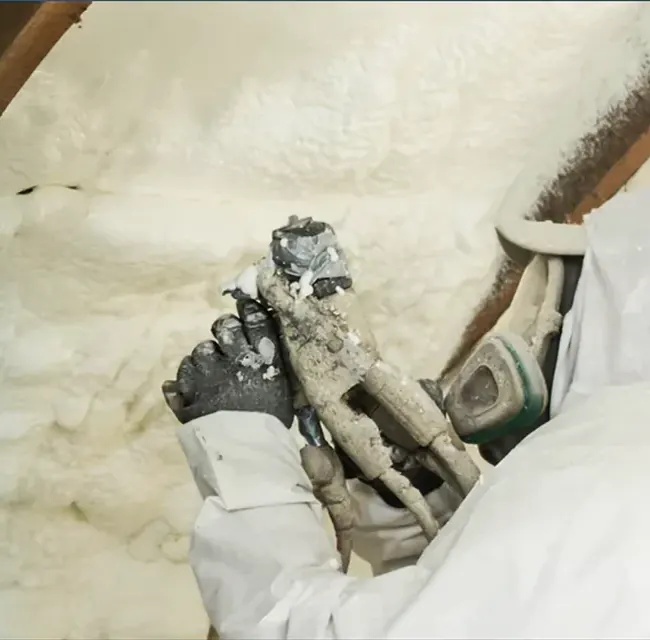
 Attics & roof decks
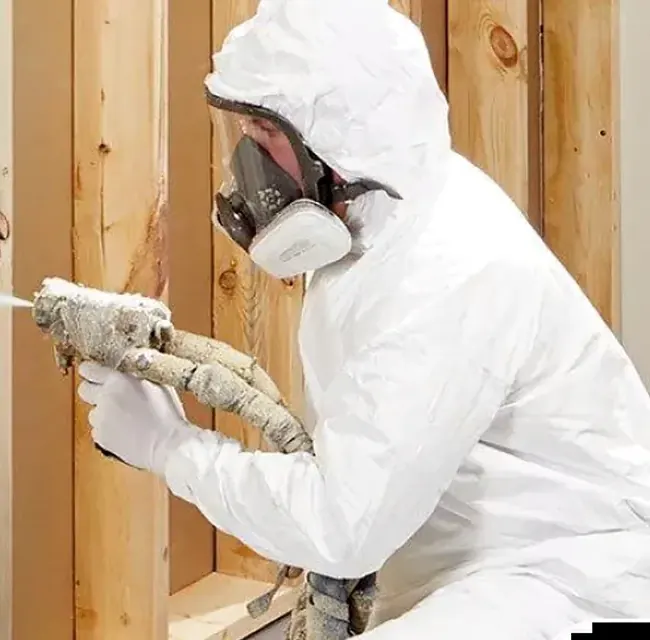 Exterior walls
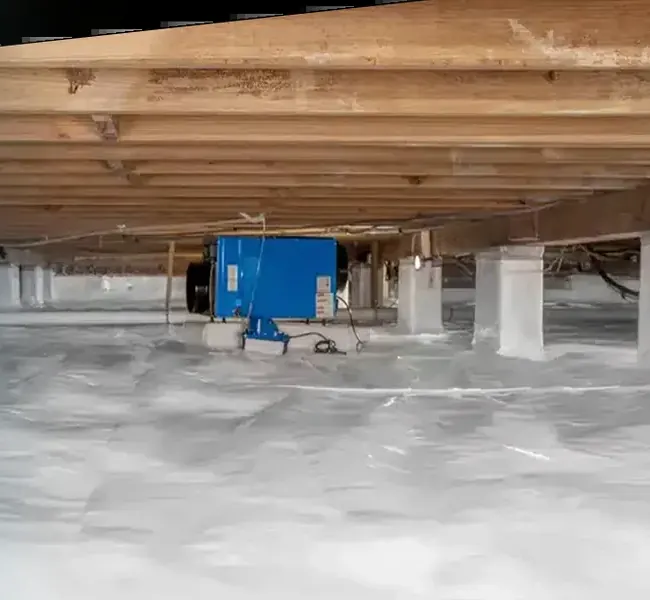 Crawl spaces & rim joists
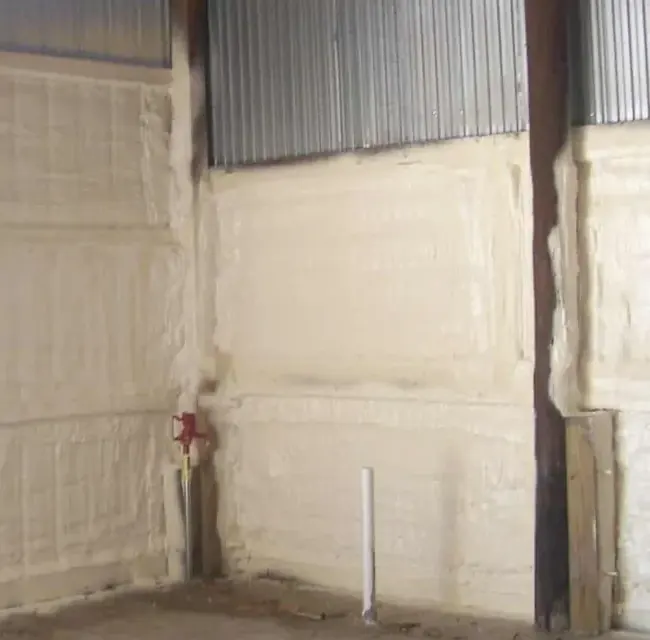 Metal buildings
 Pole barns, shops & ag
 SPF roofing
 Basement walls
 Concrete lifting
Crawl Spaces and Rim Joists: The Highest-Payback Spray Foam in a House
The bottom of a house leaks more air than most people think. How to seal the rim joist with closed-cell foam, when to convert a vented crawl space to a sealed one, and what code asks for.
Key takeaways
- Warm air rises and leaks out the top of a house; replacement air is pulled in at the bottom — through rim joists and crawl spaces.
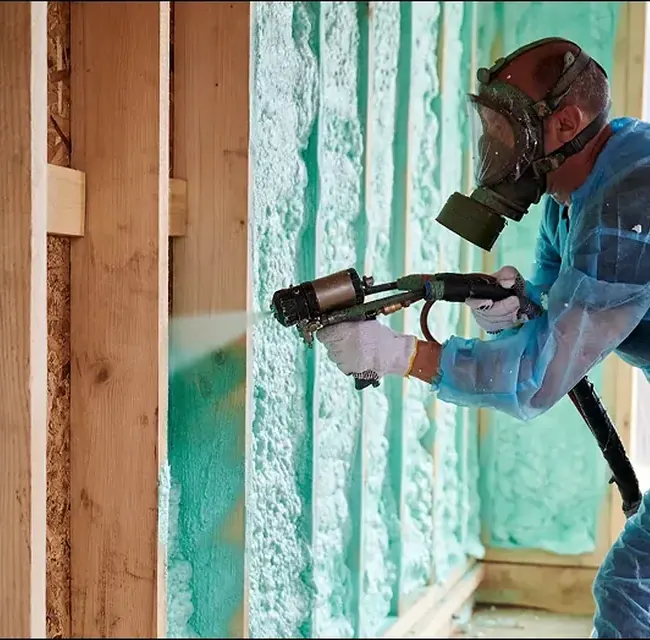
- Two to three inches of closed-cell foam on the rim joist air-seals and insulates one of the leakiest details in a home.
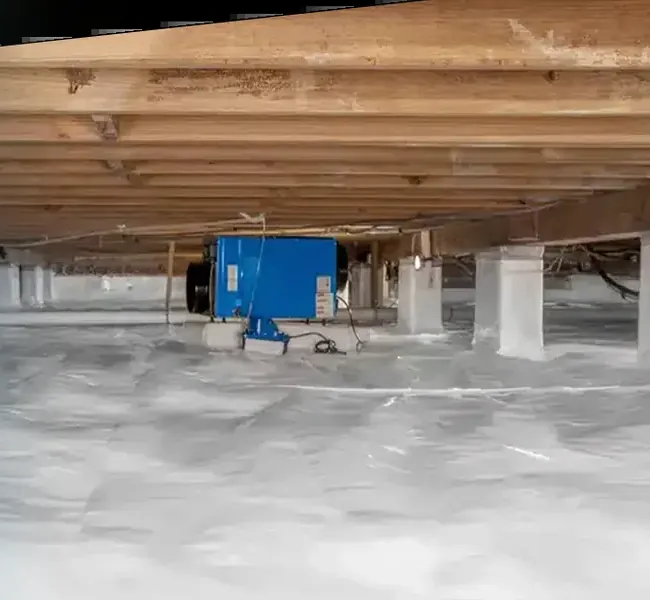
- A sealed crawl space insulates the walls (not the floor above), adds a ground vapor retarder and manages air with a fan, supply air or a dehumidifier.
- Fix water problems — gutters, grading, drainage — before any insulation goes in.
Ask where a house loses heat and most people point at the attic. They are not wrong — but they are only looking at half the circuit. Warm air rises and escapes at the top of the house. Every cubic foot that leaves has to be replaced, and the replacement comes in at the bottom: through the crawl space, the basement and the joints where the house sits on its foundation.
That is why ENERGY STAR’s sealing and insulating guidance focuses on attics, floors over crawl spaces and basements. And it is why the rim joist and the crawl space are some of the best places in a house to spend a spray foam budget.
The rim joist: small area, big leak
The rim joist (or band joist) is the board that runs around the perimeter of the floor framing, sitting on the sill plate on top of the foundation. Look at one from the basement or crawl space and you will see the problem: a long run of joints — sill to foundation, rim to sill, subfloor to rim — plus wires, pipes and vents punched through it. Most of those joints are not sealed.
The traditional fix is to stuff fiberglass batts into each joist bay. That does little for air leakage, because air moves right through fiberglass. Worse, in cold weather warm indoor air reaches the cold rim board behind the batt and condenses there, which is how rim joists end up stained and moldy.
Why closed-cell foam is the standard answer
- It bonds to wood and concrete and seals every joint and penetration in one pass.
- Two to three inches insulates to roughly R-12 to R-20.
- Because it is air-impermeable and low-permeance, indoor air never reaches the cold rim board, so condensation stops.
- It works in the awkward, cut-up joist bays that rigid board is tedious to fit.
Vented vs. sealed crawl spaces
For decades, crawl spaces were built with vents in the foundation walls so outdoor air could dry them out. In many climates, that backfires. In summer, humid outdoor air comes in, hits the cool crawl space surfaces and condenses. The result is damp wood, sagging insulation, musty smells and conditions mold loves.
A sealed (unvented, or conditioned) crawl space treats the crawl space as a short basement: the vents are closed, the walls are insulated, the ground is covered, and the space is connected to the house’s air.
| Vented crawl space | Sealed crawl space | |
|---|---|---|
| Where the insulation goes | In the floor framing above | On the foundation walls and rim |
| Ducts and pipes in the crawl space | Outside the thermal envelope | Inside it |
| Summer humidity | Outdoor air brought in | Kept out and managed |
| Floors above | Can feel cold | Closer to room temperature |
| Ground cover | Often none or partial | Continuous vapor retarder |
What code asks for in an unvented crawl space
The International Residential Code allows crawl spaces without foundation vents (Section R408.3) when two things are true. First, exposed earth is covered with a continuous vapor retarder, with joints overlapped and sealed and the edges carried up the foundation wall and attached. Second, there is a way to manage the air: a small continuous exhaust fan, a supply of conditioned air from the house, or a dehumidifier, each sized by the code’s rules. The details vary a bit by code edition, so your local building department has the final word.
Termite country
In areas where termites are a serious problem, local code may require an inspection gap at the top of the foundation or restrict foam insulation below grade. Check before you spray the walls.
How a sealed crawl space job goes
Is it worth it?
Rim joist sealing is almost always worth doing — it is a small job with a big effect on drafts and cold floors. Converting a crawl space is a bigger project, and it pays off most when the crawl space holds ducts or equipment, when the floors above are cold, or when the space is damp and musty. A good contractor will look at drainage, the HVAC system and your climate before recommending it.
Frequently asked questions
Should I insulate the crawl space walls or the floor above?
If ducts, plumbing or a furnace are in the crawl space, sealing and insulating the walls usually works better — those systems end up inside the conditioned space. Insulating the floor above is the alternative for a crawl space that stays vented, but it is harder to air-seal well.
Do I need a dehumidifier in a sealed crawl space?
Code gives you a few ways to manage air in an unvented crawl space: a small continuous exhaust fan, a supply of conditioned air from the house, or a dehumidifier. Which one fits depends on the house, the climate and the HVAC system.
How thick should foam be on a rim joist?
Two to three inches of closed-cell foam is typical. It air-seals the joints, insulates to roughly R-12 to R-20, and keeps the inside face of the rim warm enough to avoid condensation.
Next step
Get the right foam for your building.
Share a few details and the ArmorThane team will follow up with recommendations, pricing guidance and an applicator.
(417) 831-5090Keep reading
Related guides
Spray Foam on Basement Walls: Insulating Concrete Without Trapping Moisture
Basement walls lose heat and invite condensation. Why closed-cell foam bonded to the concrete beats a stud wall full of fiberglass, what…
Unvented Attics with Spray Foam: How a Conditioned Attic Works
Moving insulation from the attic floor to the underside of the roof deck brings ducts and equipment inside the house. Here is…
How to Start a Spray Foam Insulation Business
Equipment, training, licensing, insurance, pricing and finding the first customers — a practical roadmap for launching a spray foam insulation company, and…