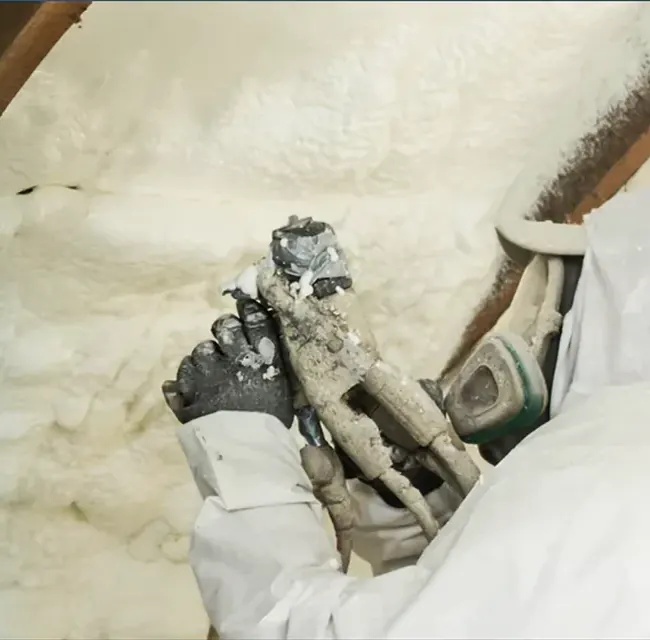
 Attics & roof decks
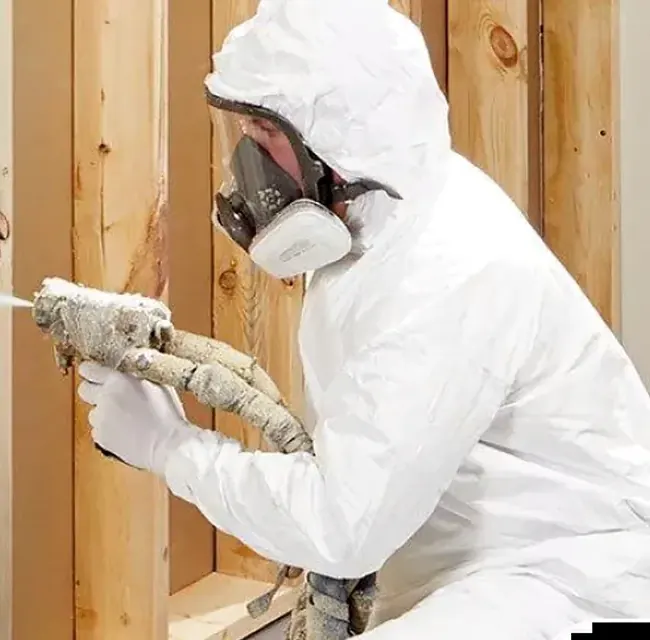 Exterior walls
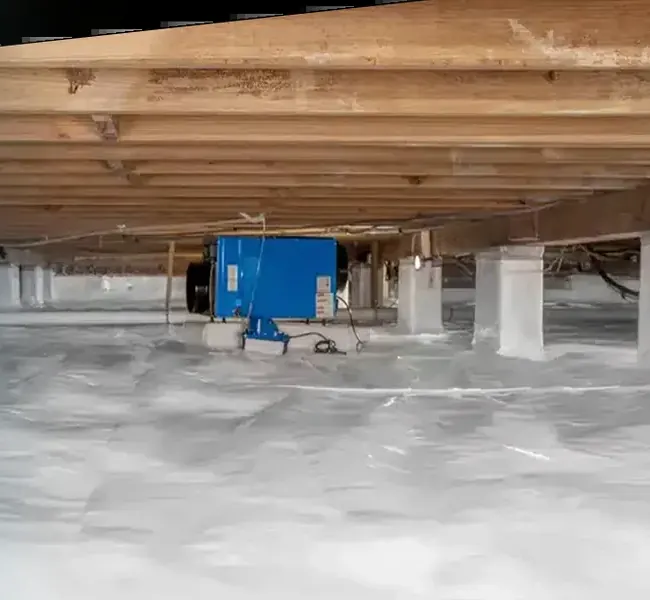 Crawl spaces & rim joists
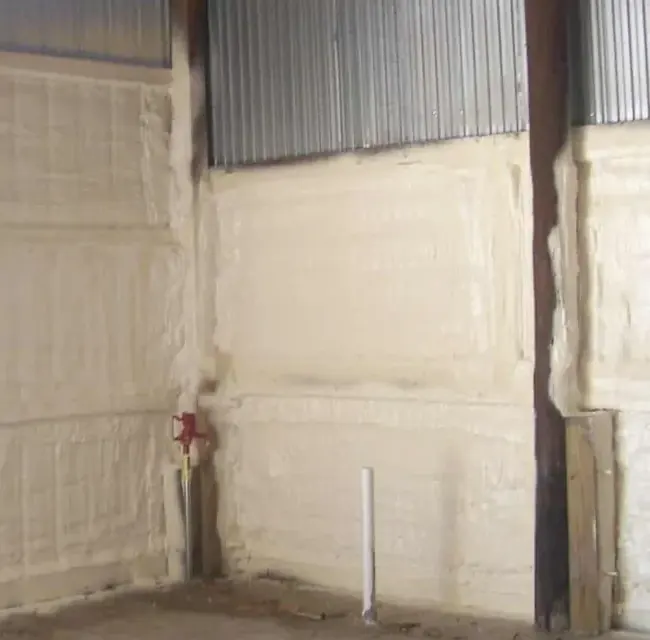 Metal buildings
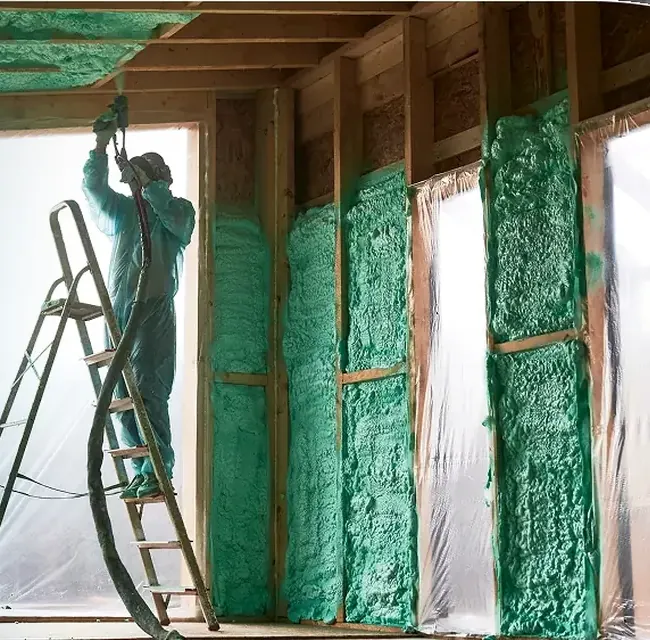 Pole barns, shops & ag
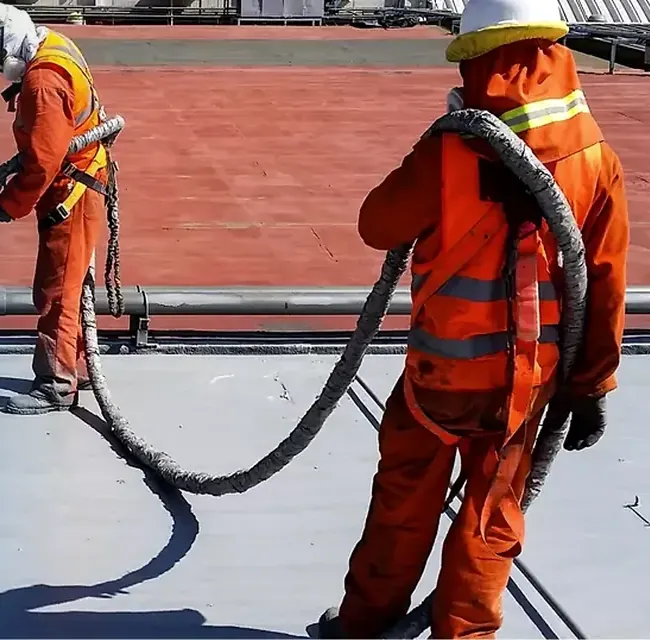 SPF roofing
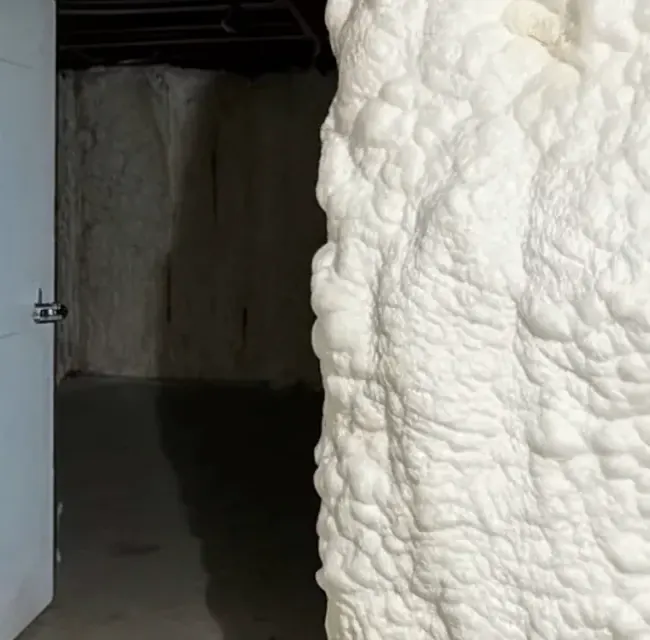 Basement walls
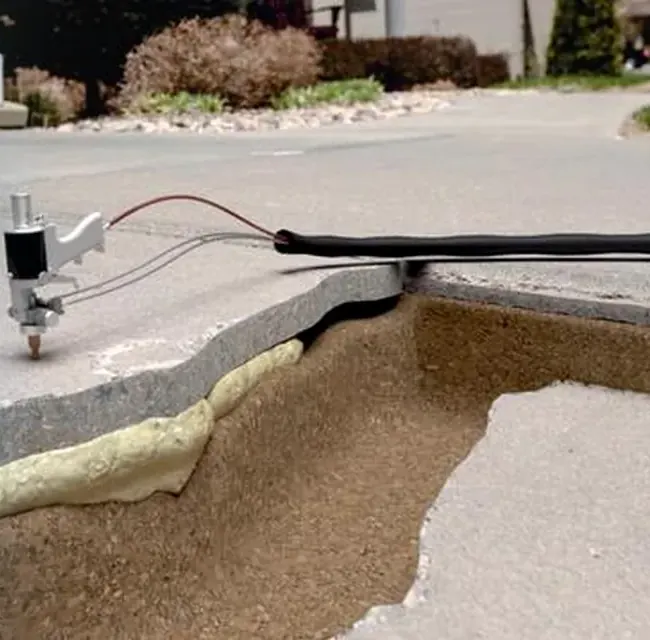 Concrete lifting
Polyurethane Foam Concrete Lifting: How Polyjacking Works
Sunken driveways, walks and floor slabs can often be raised instead of replaced. How expanding polyurethane lifts concrete, how it compares to mudjacking, and when replacement is the better call.
Key takeaways
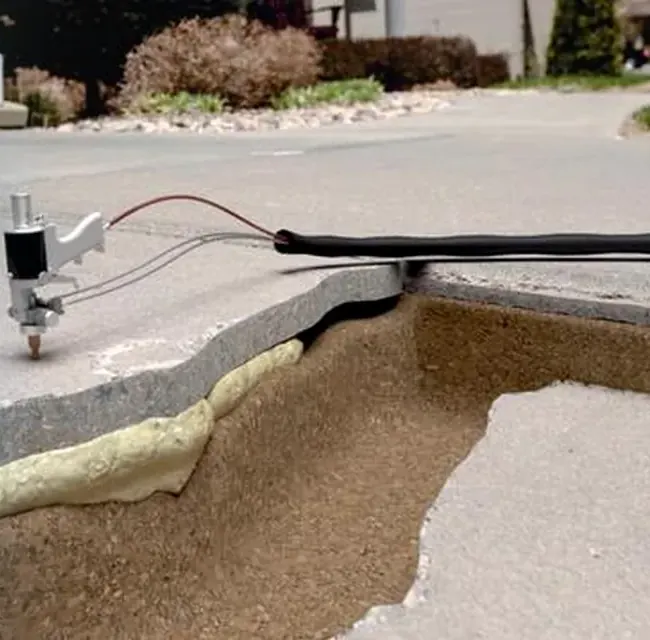
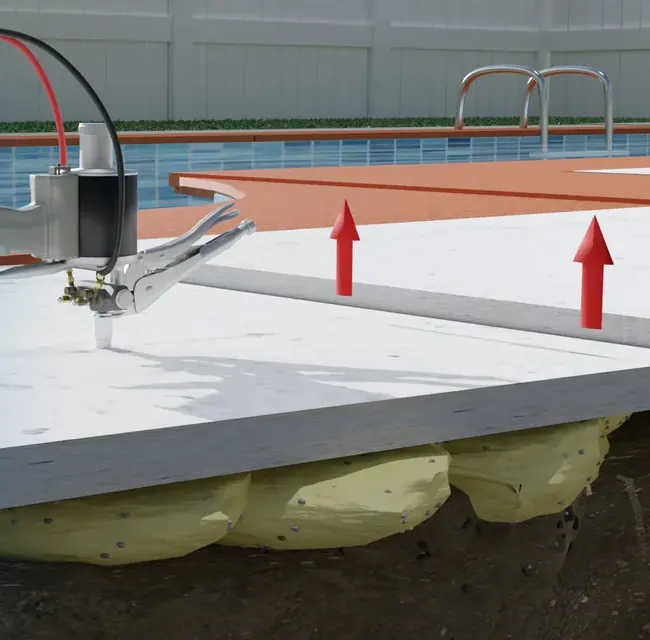
- Polyjacking injects expanding two-part polyurethane under a settled slab through small holes; the foam fills voids and lifts the slab.
- Lifting foam is lightweight and hydrophobic, so it adds little load to weak soil and is not washed out by water.
- Slabs are usually ready for foot traffic quickly — often the same day.
- Broken or crumbling slabs, and structural foundation problems, need replacement or an engineer — not foam.
Concrete slabs sink for boring reasons. Water from a downspout washes away the soil underneath. Backfill next to a foundation was never compacted. Clay shrinks in a drought. The slab loses support, settles, cracks and becomes a trip hazard — or tilts back toward the house and sends water into the basement.
Tearing it out and pouring new concrete is one fix. Lifting it back into place with expanding polyurethane foam is often a faster, cleaner, less expensive one.
How polyjacking works
Why polyurethane instead of mud?
Mudjacking — pumping a cement-and-soil slurry under the slab — has been around for decades and still works. Polyurethane has a few advantages that have made it the more common choice for flatwork:
| Polyurethane (polyjacking) | Cement slurry (mudjacking) | |
|---|---|---|
| Hole size | Small, about 5/8 in | Larger, often 1–2 in |
| Material weight | About 2–4 lb/ft³ | Roughly 100 lb/ft³ or more |
| Water resistance | Hydrophobic, will not wash out | Can erode over time |
| Back in service | Fast — often within the hour for foot traffic | Usually a day or more |
| Material cost per volume | Higher | Lower |
The weight difference matters more than it looks. If soft soil caused the settlement in the first place, pumping a heavy slurry under the slab adds load to that same soil. Foam adds very little.
Lifting foam vs. insulation foam
Lifting foams are a different formulation from spray insulation. They are designed to be structural, closed-cell and hydrophobic, with controlled reaction times so the operator can lift in small increments. ArmorThane’s ArmorFoam Lift 200 is a 2.50 pcf water-blown, closed-cell slab-jacking foam aimed at residential patios, driveways and sidewalks; Lift 300 is a denser 3.75 pcf formulation for heavier commercial and industrial slabs.
Good candidates — and bad ones
| Usually a good fit | Usually not |
|---|---|
| Driveways, sidewalks, patios and pool decks that have settled in one piece | Slabs broken into many pieces or crumbling at the surface |
| Garage and warehouse floors with voids underneath | Structural foundation movement without an engineer’s assessment |
| Steps and stoops pulling away from the house | Slabs where the soil keeps washing away and drainage will not be fixed |
| Slabs tilted toward a foundation | Concrete that is cheaper to replace than to lift |
Fix the cause
Most settlement starts with water. Redirect downspouts, fix grading and seal joints during or right after the lift, or the soil will keep moving.
A good add-on for foam contractors
Concrete lifting uses a smaller, simpler setup than a full insulation rig, and the jobs are short — often a few hours. For applicators already handling two-component polyurethanes, it is a natural second line of work, and homeowners who call about a sinking walk often need insulation, too.
Frequently asked questions
Is polyjacking better than mudjacking?
Each has a place. Polyurethane uses smaller holes, weighs far less than cement slurry, sets quickly and resists water. Mudjacking material is less expensive per volume. For most residential driveways, walks and patios, polyurethane is the more common choice today.
How long does lifted concrete stay up?
If the cause of the settlement — usually water eroding or softening the soil — is addressed, a properly lifted slab can stay put for many years. Fixing downspouts and drainage is part of a good lifting job.
Can foam lift a house foundation?
Polyurethane is used in some structural and commercial applications, but foundation movement in a house calls for an engineer's assessment first. Foam lifting is most often used on flatwork: driveways, sidewalks, patios, garage and warehouse floors.
Next step
Get the right foam for your building.
Share a few details and the ArmorThane team will follow up with recommendations, pricing guidance and an applicator.
(417) 831-5090Keep reading
Related guides
Spray Foam in Metal Buildings: How to Stop Condensation for Good
Why steel buildings drip, why faced fiberglass so often fails, and how closed-cell spray foam keeps warm, humid air off cold panels…
How to Start a Spray Foam Insulation Business
Equipment, training, licensing, insurance, pricing and finding the first customers — a practical roadmap for launching a spray foam insulation company, and…
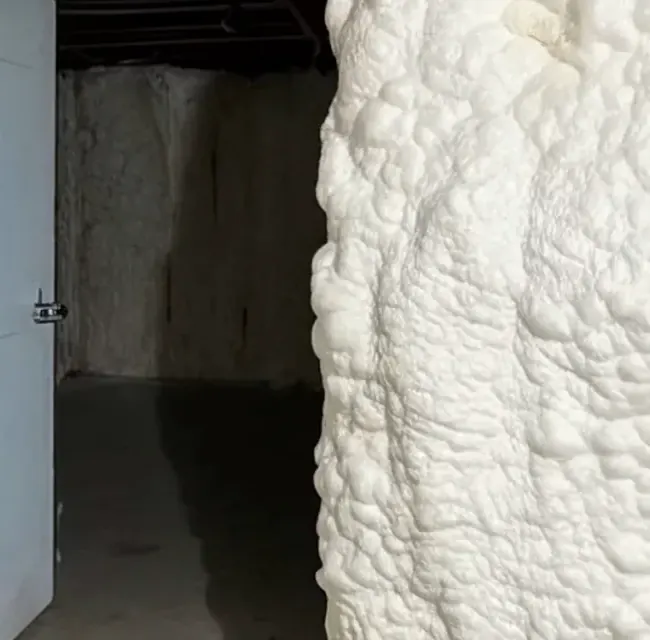
Spray Foam on Basement Walls: Insulating Concrete Without Trapping Moisture
Basement walls lose heat and invite condensation. Why closed-cell foam bonded to the concrete beats a stud wall full of fiberglass, what…