
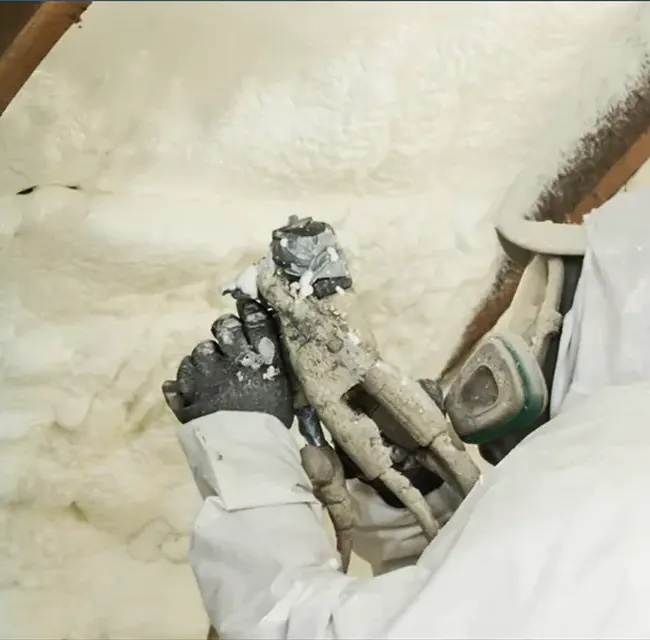
 Attics & roof decks
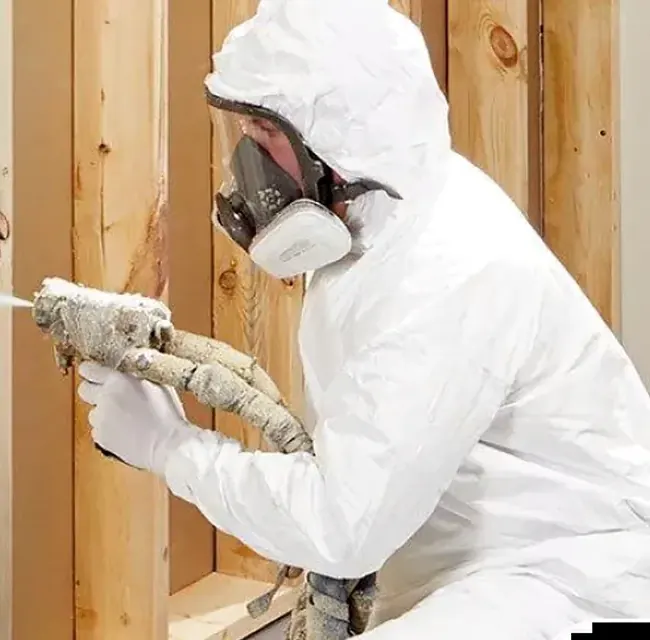 Exterior walls
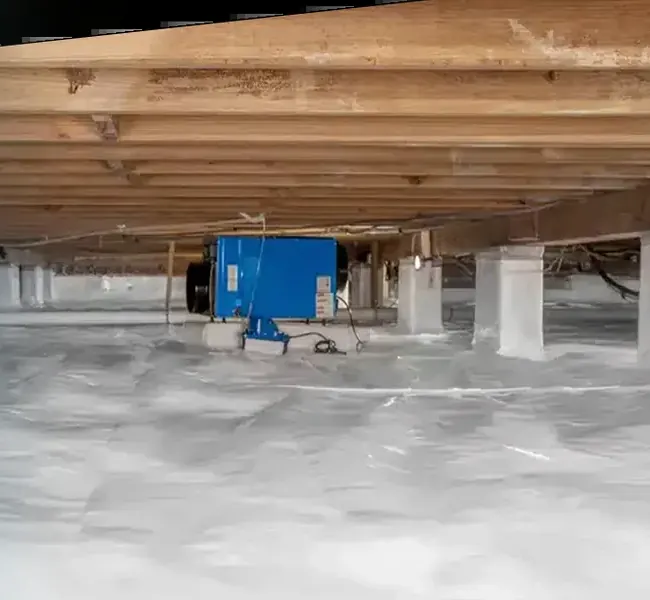 Crawl spaces & rim joists
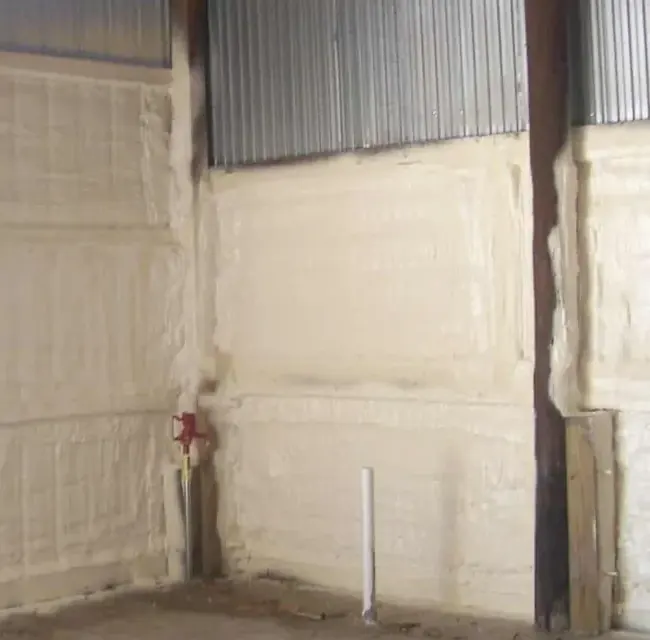 Metal buildings
 Pole barns, shops & ag
 SPF roofing
 Basement walls
 Concrete lifting
Spray Foam R-Value Per Inch: Open Cell, Closed Cell and How They Stack Up
Closed-cell foam runs roughly R-6 to R-7 per inch and open-cell roughly R-3.5 to R-3.8. Here is what those numbers mean, how to hit code in walls and attics, and why R-value is not the whole story.
Summary
Closed-cell foam runs roughly R-6 to R-7 per inch and open-cell roughly R-3.5 to R-3.8. Here is what those numbers mean, how to hit code in walls and attics, and why R-value is not the whole story.
R-value is the number everyone asks about first, and for good reason. It is the standard way to compare how well insulation resists heat flow. With spray foam, the answer depends on which foam you mean, and the number on its own does not capture everything foam does.
The quick numbers
| Material | Approximate R-value per inch |
|---|---|
| Closed-cell spray foam | About R-6 to R-7 |
| Open-cell spray foam | About R-3.5 to R-3.8 |
| Fiberglass batts | About R-3 to R-4 |
| Blown cellulose | About R-3.2 to R-3.8 |
| Mineral wool | About R-3 to R-4.3 |
| Rigid polyiso board | About R-5.5 to R-6.5 (lower in deep cold) |
| Rigid XPS board | About R-5 |
Exact values vary by product, so always check the manufacturer’s data sheet. For a broader table, ArmorThane keeps an insulation R-value chart covering most common materials.
What it means in a real wall
A standard 2×4 wall cavity is about 3.5 inches deep.
- Filled with open-cell foam, that is roughly R-13.
- With closed-cell, 2 to 3 inches can deliver roughly R-13 to R-20, and filling the cavity can go higher, though most contractors do not fill full depth with closed cell because of cost and heat during curing.
In a 2×6 wall at 5.5 inches, open-cell reaches roughly R-20, which meets common requirements in many climate zones.
Attics and roof decks
Attic R-value targets are much higher, often R-38 to R-60 depending on climate zone. Hitting those numbers with foam alone on a roof deck takes a lot of material, so many projects combine foam with other insulation, or follow code paths that credit foam’s air sealing. We cover the design choices in our post on unvented attics with spray foam.
Why R-value is not the whole story
Air sealing
R-value only measures conductive heat flow in a lab. It says nothing about air leaking through gaps. Fiberglass with gaps around wiring and outlets can underperform its label noticeably. Spray foam seals those gaps as it insulates, which is a big part of why foam-insulated homes often perform better than the R-value numbers alone would predict.
Moisture
Closed-cell foam also acts as a vapor retarder at enough thickness. Open-cell does not, which matters in cold climates and on roof decks.
Aging
Closed-cell foam’s R-value can settle slightly over time as blowing agents diffuse. Manufacturers often publish an aged or long-term value. Compare those numbers, not just the fresh ones.
Open or closed cell?
Use closed-cell where you need maximum R per inch, vapor control, or added rigidity: rim joists, basement walls, metal buildings, and tight spaces. Use open-cell for interior walls, sound control and many roof deck applications in milder climates. Our post on where to use open cell vs closed cell has the full breakdown, and the installers at Spray Foam Forum regularly debate real-world results.
Next step
Get the right foam for your building.
Share a few details and the ArmorThane team will follow up with recommendations, pricing guidance and an applicator.
(417) 831-5090Keep reading
Related guides

Spray Foam Soundproofing: How Much Quieter Will It Really Make a Room?
Spray foam can cut noise, especially open-cell foam in interior walls and ceilings, but it is not a true soundproofing system on…
Open-Cell vs. Closed-Cell Spray Foam: Which Goes Where
Density, R-value, moisture and cost explained in plain language — then a location-by-location guide to which foam belongs in attics, walls, rim…

Foam Insulation: The Smart Choice for Efficient Homes
Foam insulation offers a versatile and efficient solution for insulating homes and buildings. Understanding the different types of foam insulation and their…