
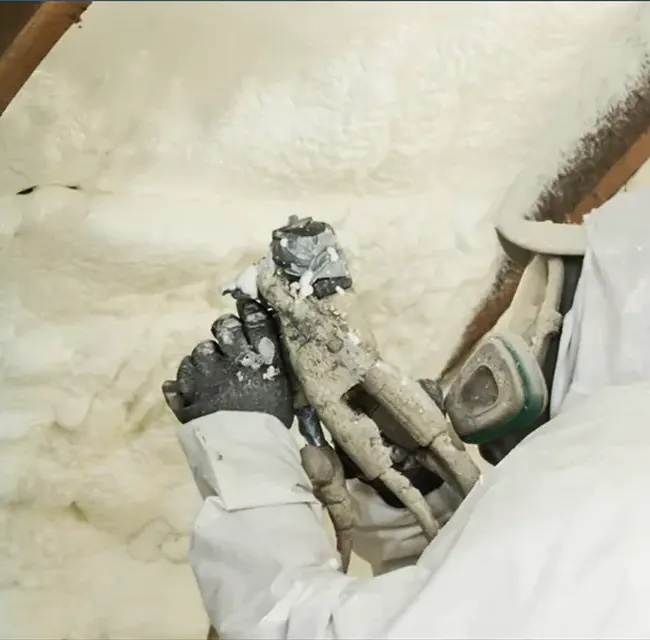
 Attics & roof decks
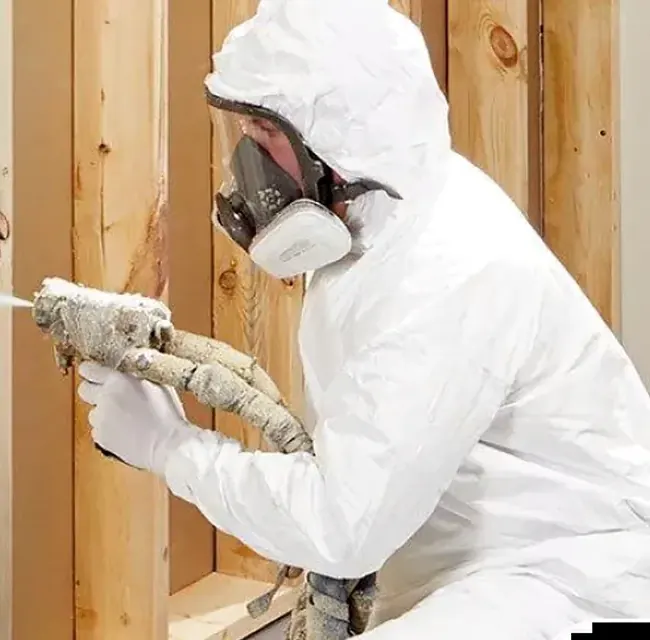 Exterior walls
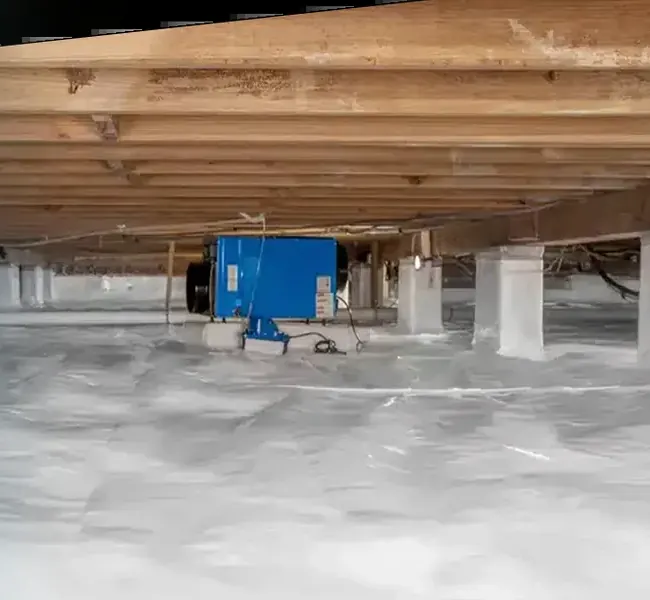 Crawl spaces & rim joists
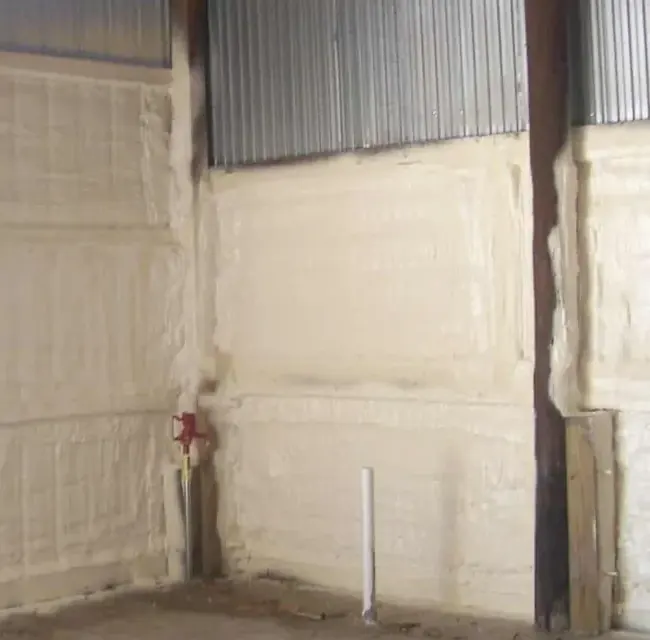 Metal buildings
 Pole barns, shops & ag
 SPF roofing
 Basement walls
 Concrete lifting
Spray Foam Soundproofing: How Much Quieter Will It Really Make a Room?
Spray foam can cut noise, especially open-cell foam in interior walls and ceilings, but it is not a true soundproofing system on its own. Here is what it does well, where it falls short, and how to combine it with other methods.

Summary
Spray foam can cut noise, especially open-cell foam in interior walls and ceilings, but it is not a true soundproofing system on its own. Here is what it does well, where it falls short, and how to combine it with other methods.
Spray foam gets sold as an insulation product, but a lot of people call an installer because of noise: a home office next to the kids’ playroom, a bedroom over the garage, a media room, a house near a busy road. Spray foam can help with all of those. It just helps in a specific way, and knowing the difference between reducing noise and soundproofing a room will save you from disappointment.
How sound gets through walls
Sound travels two main ways. Airborne sound, like voices, TV and traffic, moves through the air and through any gaps in a wall. Impact sound, like footsteps and slammed doors, travels through the framing itself. Real soundproofing deals with both, using four tools: mass, decoupling, absorption and airtightness.
Spray foam is good at two of those: absorption in the case of open-cell foam, and airtightness for both kinds. It adds very little mass and does nothing to decouple framing.
Open-cell vs closed-cell for sound
| Open-cell foam | Closed-cell foam | |
|---|---|---|
| Structure | Soft, spongy, air-filled cells that are connected | Rigid, dense, sealed cells |
| Sound absorption | Good; absorbs mid and high frequencies | Lower; more rigid and reflective |
| Air sealing | Good | Excellent |
| Best for sound | Interior walls, ceilings, home theaters, offices | Exterior walls where moisture control matters more |
| Cost | Lower per inch | Higher per inch |
For pure noise control inside a house, open-cell is usually the better choice. ArmorThane’s detailed comparison of open-cell vs closed-cell spray foam covers the other trade-offs, including moisture and R-value.
What to realistically expect
In a standard stud wall with drywall on both sides, filling the cavity with open-cell foam typically makes a noticeable difference in how loud voices and TVs sound on the other side. Conversation becomes muffled rather than clear. The effect is roughly comparable to filling the cavity with mineral wool or fiberglass batts, with the added benefit that foam seals the small air gaps around outlets, pipes and top plates where sound leaks through.
What it will not do on its own:
- Stop deep bass from a subwoofer or a band practice
- Block footsteps and impact noise from the floor above
- Make a shared wall in a condo or duplex silent
- Fix noise that is getting through doors, windows or ductwork
Where spray foam shines for noise
- Exterior walls and rooflines near traffic. Sealing air gaps cuts a surprising amount of road noise, and you get insulation at the same time.
- Home offices and bedrooms. Open-cell in interior walls takes the edge off household noise.
- Floors over garages. Foam reduces airborne noise and drafts from below.
- Metal buildings and shops. Foam dampens the “tin can” effect of rain and reduces echo.
- Plumbing chases. Foam around drain lines reduces the rush of water noise.
Combining foam with real soundproofing methods
For rooms where quiet matters, use foam as one layer in a system:
- Foam the cavity to seal air leaks and absorb sound.
- Add mass with a second layer of drywall or denser sound-rated drywall.
- Use a damping compound between drywall layers to convert vibration to heat.
- Decouple with resilient channels or sound isolation clips so the drywall is not tied directly to the studs.
- Seal the perimeter with acoustical sealant and use solid-core doors with good seals.
Each step adds cost, but together they produce a far bigger improvement than any single product.
Common mistakes
- Using closed-cell foam inside interior walls specifically for sound; open-cell is cheaper and usually better for that job.
- Foaming the walls and forgetting the door, which is often the weakest point.
- Expecting foam to fix impact noise from upstairs floors.
- Leaving outlets back-to-back in a shared wall, which creates a direct sound path.
The bottom line
Spray foam is a good noise reducer and an excellent air sealer, and when you are insulating anyway, the acoustic benefit comes almost for free. For a true soundproof room, treat it as one piece of a bigger system. If you are still choosing an insulation type, our comparison of spray foam vs fiberglass covers how the two perform for both heat and sound, and Springfield Foam’s breakdown of spray foam vs blown-in insulation covers the attic side of the decision.
Next step
Get the right foam for your building.
Share a few details and the ArmorThane team will follow up with recommendations, pricing guidance and an applicator.
(417) 831-5090Keep reading
Related guides
Spray Foam R-Value Per Inch: Open Cell, Closed Cell and How They Stack Up
Closed-cell foam runs roughly R-6 to R-7 per inch and open-cell roughly R-3.5 to R-3.8. Here is what those numbers mean, how…
Open-Cell vs. Closed-Cell Spray Foam: Which Goes Where
Density, R-value, moisture and cost explained in plain language — then a location-by-location guide to which foam belongs in attics, walls, rim…

Foam Insulation: The Smart Choice for Efficient Homes
Foam insulation offers a versatile and efficient solution for insulating homes and buildings. Understanding the different types of foam insulation and their…